
Sarcoma Awareness Month: Why Early Screening Matters
July is recognised internationally as Sarcoma Awareness Month. This month brings to light the rare cancer stream that often go unnoticed. Sarcoma makes up less than 1% of bone sarcomas and soft tissue sarcomas with many people having never heard of it or knowing what to look out for. The subtlety and rarity of this strain of cancer has made it even more important to create awareness about sarcomas. Open conversations with healthcare professionals and a better understanding of the role of medical imaging can empower people to recognise when something isn’t right and seek medical advice sooner.
What is Sarcoma?
Sarcoma is a rare type of cancer found in the body’s connective tissue, typically found in muscles, fat, tendons, blood vessels, nerves and bones. What makes sarcoma different from other cancers, which typically develop in specific organs, is that it can develop in almost any part of the body, thus making it extremely difficult to recognise.
Why is it so Difficult to Detect?
What makes sarcomas particularly challenging to identify, is that the telltale symptoms often resemble common non-cancerous conditions. Some of the most common warning signs include:
- A lump that continues to grow,
- Persistent swelling,
- Unexplained pain, especially in a bone or limb,
- and reduced movement if the tumour is close to a joint.
What makes sarcomas especially difficult to detect is that emerging symptoms may not be immediately noticeable. Take, for example, a lump on a person’s arm or leg, the lump may not feel painful, but over time it starts to create discomfort or pain.
Regardless of the potential symptom or whether a person is having doubts or uncertainties, it is essential to consult with your doctor to determine the underlying cause.
If a healthcare professional suspects a lump is cancerous, or a potential tumour is developing in the connective tissue bones and requires further investigation, imaging is usually one of the first steps to provide clarity.
MBRI’s comprehensive diagnostic imaging services supports referring healthcare professionals by providing detailed images that help investigate abnormalities, assess the extent of potential diseases and supports patient care.
Imaging is a great starting point to pick up on sarcomas and is not a one-size-fits-all solution that will provide answers to every clinical question. Image modelling systems have been designed to examine different structures within the body.
How is Sarcoma Detected
There are a number of approaches that can be used to detect sarcoma. Typically, the following methods are used.
X-rays
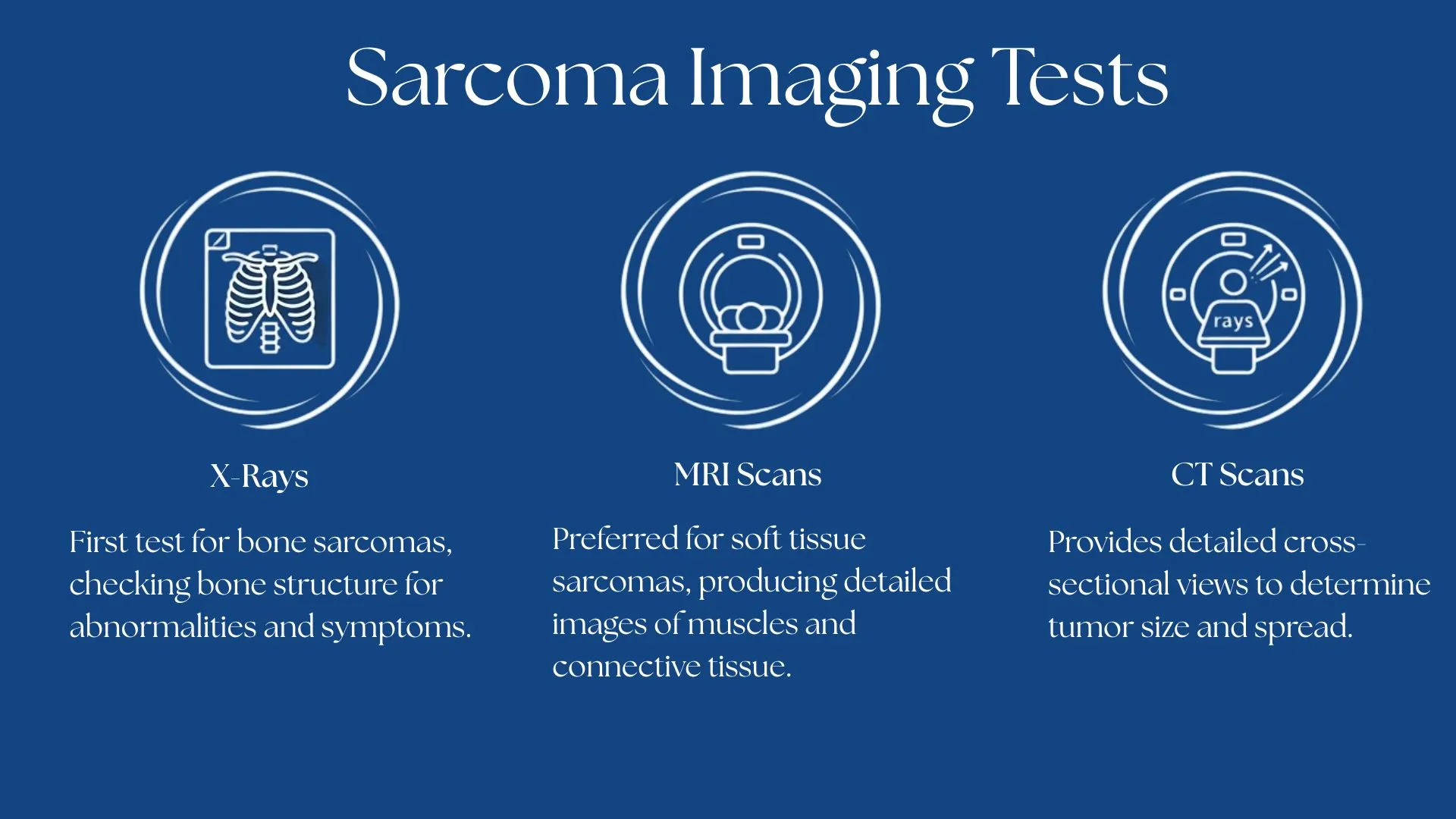
An X-ray is often the first test a medical professional will send a patient for to check for bone sarcomas. X-rays allow doctors to review a patient’s bone structure, checking for abnormalities like changes in bone density, fractures or other warning signs that require further investigation.
MRI Scan
When there are grounds for suspected soft tissue sarcomas, an MRI scan is the preferred imaging modality. The underlying difference between X-rays and an MRI scan lies in X-rays focusing on the bones, while MRIs produce highly detailed images of muscles, tendons, ligaments, nerves and other connective tissue. This allows medical professionals to identify the location of a tumour and how it is impacting surrounding body structures.
CT Scans
In terms of imagery depth, CT scans provide the most detailed cross-sectional view of the body. A CT scan allows medical professionals to determine the size of the tumour and identifying the extent to which the disease has spread throughout the body, whether it’s critical organs or connective tissue. After a medical professional receives the scans, they can carefully review the images to inform a patient specific-treatment plan.
Raising Awareness Through Early Screening
Although sarcomas are rare, it never hurts to be aware of the potential symptoms and to take proactive action. Medical imaging gives doctors a clearer picture of what is happening inside the body, helping them investigate symptoms more accurately, make an informed diagnosis and recommend the most appropriate treatment.
Sarcoma Awareness Month, is all about taking the time to understand the signs and the role imaging plays in early detection and, ultimately, better-informed healthcare decision-making.